
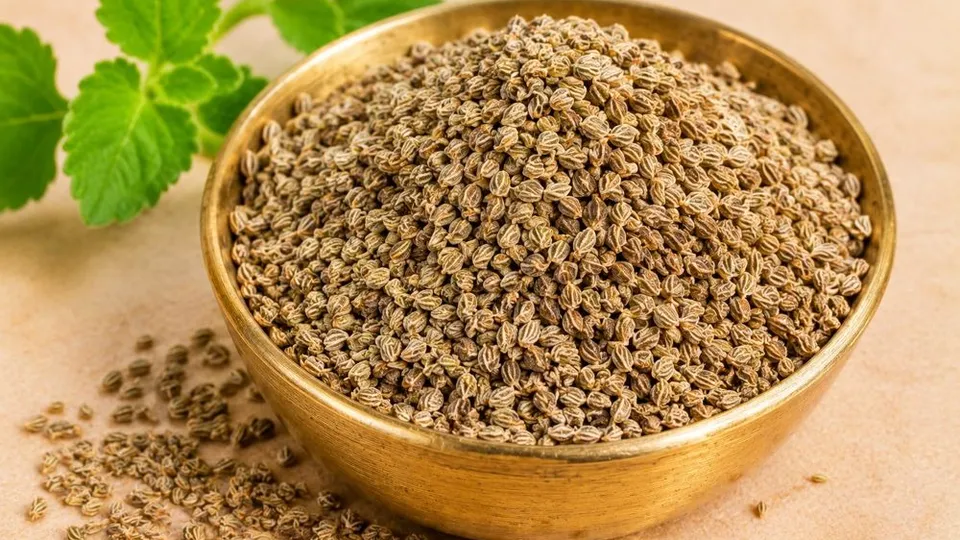
Parathas, puris, pakoras or mathri - without ajwain they just don't taste complete. And the moment someone's stomach feels heavy, someone at home says, "Take a little ajwain." But the real question is: how well does ajwain actually work, how much should you take, and who needs to be careful with it?
In this article we talk plainly and honestly about all three - ajwain benefits, dosage and precautions. No exaggerated claims; where the evidence is weak, we will say so clearly.
What is ajwain, and which one is the real ajwain?
In English, ajwain is called carom seed, and its botanical name is Trachyspermum ammi. The little "seeds" we use are actually the fruit (seed) of the plant.
One important point: the market also sells things called ajmod and ajwain khurasani - neither of these is ajwain. The names sound alike, but the plants are different. Always ask the pansari (spice and herb shop) for it by its full, clear name.
What are the benefits of ajwain?
- A kitchen spice - for taste and aroma in parathas, puris, pakoras and tadka.
- Traditionally, for digestion - it has been used for generations for indigestion, stomach ache and gas.
Now the honest part: solid research on ajwain in humans is limited. This means its benefits for the stomach rest mostly on tradition and experience, not on large, strong studies. So think of ajwain as a support, not a treatment.
The good news is that ajwain in the amount used as a spice in food is considered safe. Adding it like a spice to your daily meals is considered fine.
How much ajwain should you take?
This is where the biggest mistake happens. People think that anything in the kitchen can be taken in any amount without harm. But remember one simple rule - a food amount and a medicine amount are two different things. Something safe as a pinch in the kitchen can be dangerous in a capsule.
That is why this article deliberately does not give a medicine-like dose. If you want to take ajwain in more than food amounts, like a medicine - especially during pregnancy or breastfeeding, for children, or if you are on any medicine - ask your doctor first.
| Form of ajwain | What is fine | Keep in mind |
|---|---|---|
| Spice in parathas, puris, tadka | Normal food amounts are considered safe | Seeds should be clean and fresh |
| Large, medicine-like amounts | Not without asking a doctor | Special care in pregnancy, or with BP medicines or blood thinners |
| Sat ajwain (thymol crystals) | This is a strong chemical, not a spice | Keep out of children's reach, in a high, closed place |
How can ajwain help with gas and indigestion?
If you have gas, bloating or indigestion, a few habits help more than ajwain. The right order is - first check for danger signs, then fix your habits, and use kitchen ingredients alongside.
- Eat slowly, don't stuff yourself; finish dinner 2-3 hours before bed.
- Cut down on fried and spicy food, cold drinks and late-night tea.
- Walk for 10-15 minutes after meals.
- Alongside, ajwain or cumin in food, or a little fennel after meals - these are used in tradition, but the evidence is limited.
If gas and indigestion trouble you daily for more than 2 weeks, or the problem has started newly after the age of 45, don't rely on home remedies - get checked by a doctor.
Who should be careful with ajwain?
How to pick good ajwain at the pansari and store it
- The seeds should be clean, brownish-grey and ridged; when rubbed on your palm, they should give a strong aroma.
- There should be little dust, straw bits or broken seeds.
- Cases of different varieties being mixed together in the market have been recorded - test it by its aroma. If it smells faint, stale or mouldy, don't buy it.
- If the seeds are stuck together, or you see webs, holes or powdery dust - it has weevils.
- Buy only a little at a time, enough for 1-3 months; old ajwain loses its aroma and effect.
Store ajwain in an airtight container, in a cool, dark place. We did not find a reliable source for exactly how long it lasts - so replace it when its aroma fades or you see weevils. Never put a wet spoon in the container.
If you suspect adulteration, keep a proper bill and you can complain on FSSAI's Food Safety Connect app or on the toll-free number 1800-112-100.
The bottom line
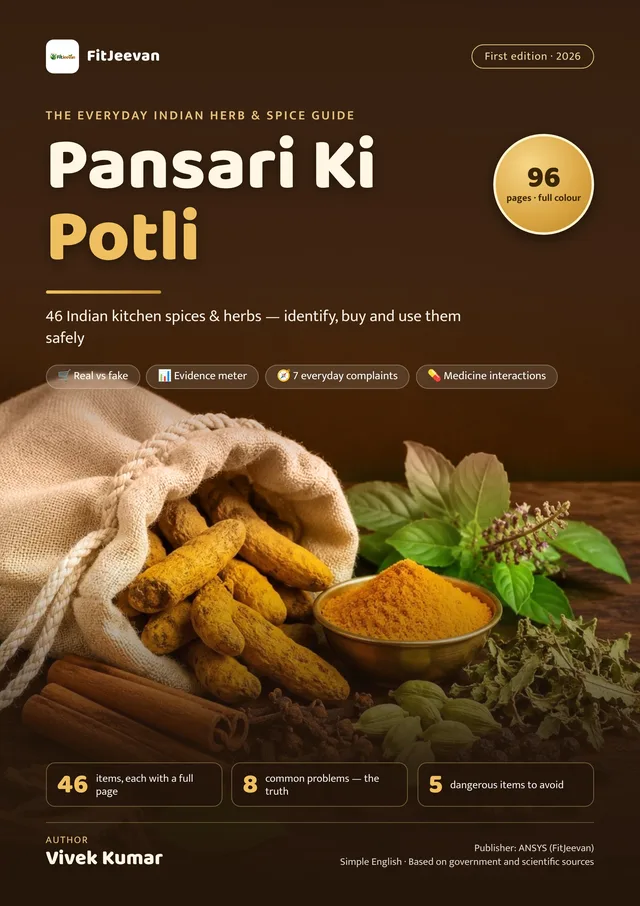
Ajwain is a trusted kitchen spice, and its traditional use for digestion is old - but solid research in humans is limited. That is the essence of ajwain benefits, dosage and precautions: use it freely in food, think carefully before using it like a medicine, and if danger signs appear, go straight to a doctor. Correct identification of 46 pansari items, how to avoid adulteration, and the precautions for each one - all in one place in the book "Pansari Ki Potli".
 Ashwagandha: Benefits, Dosage and Who Should Not Take It - The Truth
 Turmeric Benefits, Dosage and Who Should Be Careful: The Full Truth
 How to Take Isabgol: Right Way, How Much, Water Rule & Precautions
