
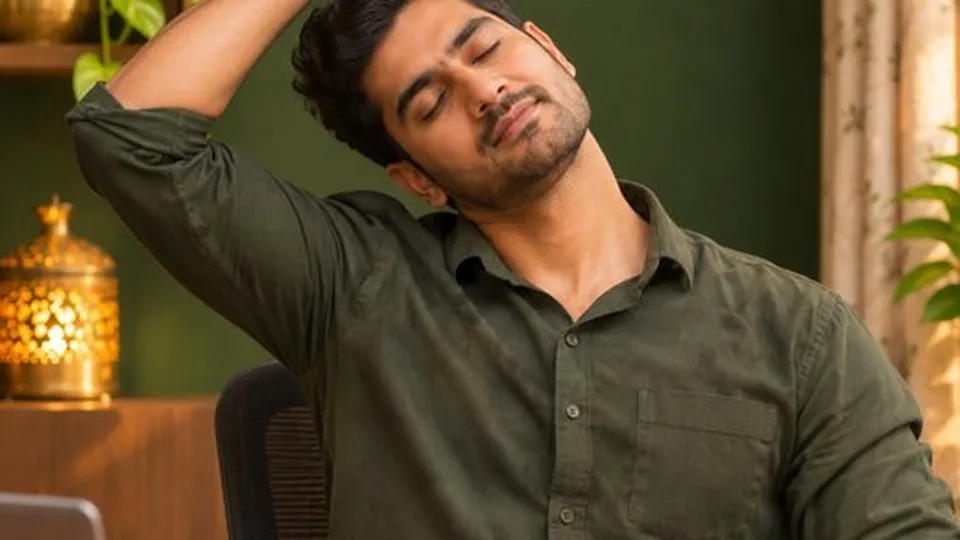
Your forehead suddenly feels heavy in the middle of work, as if someone were tightening a band around your head - almost everyone gets a headache like this at some point. The good news is that most common headaches come from small everyday slip-ups, and a few simple home steps can bring relief.
But there is another truth about headaches: some headaches are a danger sign - for example a stroke, a stiff neck with fever, or very high BP. So this article covers both: home remedies for headache and the danger signs, so you know when it is fine to watch at home and when you must not lose even a minute.
Why does a headache happen?
The most common is the tension headache (tension-type headache) - a band-like pressure on the forehead or around the head. Ayurveda links it to Vata and Pitta. Its common causes are:
- Drinking too little water
- Not getting enough sleep
- Staying hungry or skipping meals
- Hours in front of mobile and computer screens
- Stress and worry
- Suddenly giving up your tea habit
Migraine is different - it often brings a throbbing pain on one side of the head, vomiting and trouble with light. If this happens again and again, it is best to get checked by a doctor.
Home remedies for headache - how much and how
1. Water and rest
- HowDrink 1-2 glasses of water and lie down in a dark, quiet room.
- How long20-30 minutes of rest.
- WhyLack of water and tiredness are common causes of tension headache - that is why this is the first step.
2. Gentle forehead and neck massage
- HowMassage your temples and the back of your neck with your fingertips in small circles, with a light hand.
- Peppermint (pudina) oilSome people get relief from well-diluted peppermint oil on the forehead.
- Not forKeep peppermint oil away from the eyes and do not use it on children at all.
3. Ginger tea
- HowBoil a piece of ginger in 1 cup of water, strain and drink.
- BenefitIt may help even if you feel nauseous along with the headache.
- CautionThe ginger in a cup of tea is a normal amount. If you take blood thinners (such as warfarin, aspirin) or have gallstones, ask your doctor before taking ginger daily in large amounts like a medicine. In pregnancy too, ask your doctor/ANM first.
What should you do and avoid during a headache?
| Do | Don't |
|---|---|
| Eat on time - don't stay hungry | Skipping meals |
| Drink plenty of water through the day | Watching screens late into the night |
| Sleep and wake at the same time every day | Taking painkillers again and again |
| If you want to cut down on tea, do it slowly | Stopping tea suddenly |
Which habits help if you get headaches often?
The real difference in headaches comes from daily habits. Ayurveda too says that to keep Vata balanced, the first thing is a regular daily routine - getting up, eating and sleeping at fixed times.
- Sleep: Go to bed and wake up at the same time every day. 7-8 hours of sleep for adults.
- 20-20-20 rule: While working on a screen, every 20 minutes look at something 20 feet away for 20 seconds. Tired eyes are also a cause of headache.
- Screen distance: Keep the screen an arm's length from your eyes and slightly below eye level; don't look at your phone in the dark.
- Bhramari pranayama: 5 times - it is counted among the safest pranayamas.
- Shavasana: Lie on your back for a few minutes and let your body go loose - it helps reduce stress.
Headache danger signs: when NOT to use home remedies?
Most headaches are not dangerous, but if you notice any of the signs below, stop the home remedies. In an emergency like a stroke, the first few hours are the most precious.
To spot a stroke, remember BE FAST: Balance lost, Eyes seeing less, Face drooping, Arm weak, Speech difficulty - and Time, meaning go to hospital immediately. In an emergency, call 108 (ambulance) or 112.
Final word
For a common headache, start with water, rest and eating on time - then a gentle massage and ginger tea. In the long run, improving your sleep, screen and stress habits helps the most. And always remember the danger signs.
Besides headache, home remedies for 61 common ailments - including back, knee, neck and heel pain - with their doses and the "when to see a doctor" signs for each, are given in detail in the book 'Ayurvedic Home Remedies'.
 What to Eat in Winter: Easy Ayurvedic Diet for Hemanta & Shishira
 Acidity & Heartburn Home Remedies: 3 Tips, Dose, When to See a Doctor
 Hair Fall Home Remedies: Causes, Tests & When to See a Doctor
 Cold and Cough in Kids: 3 Safe Home Remedies & Danger Signs
