
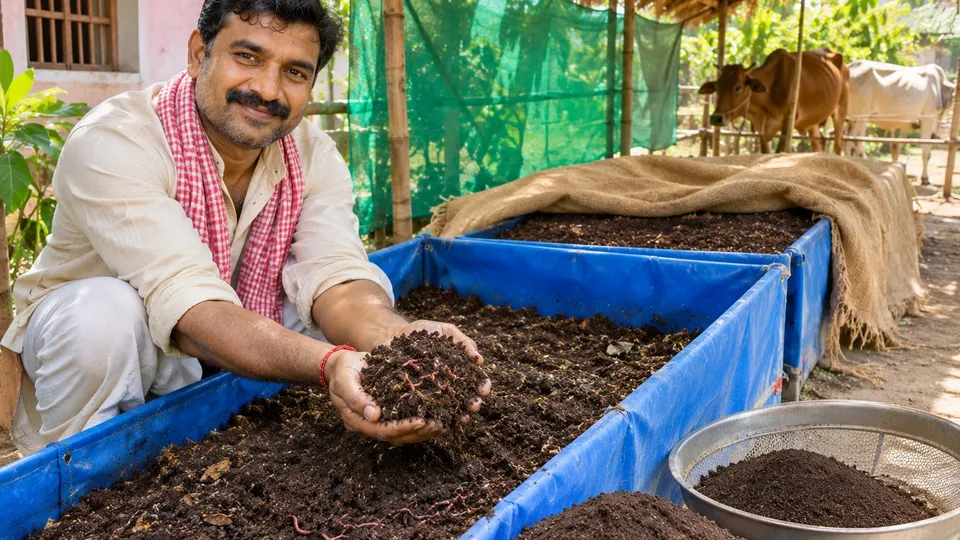
"Raise earthworms, earn lakhs" - you have surely heard this line in some video. The truth is a little different. Based on the data, the estimate is that 100 sq ft can give about 2-4 tonnes of compost a year, which when sold wholesale works out to around ₹10,000-80,000 a year (estimate).
Still, vermicompost (earthworm compost) is a sensible thing to do - especially if your home has cow or buffalo dung, or kitchen and garden waste. This article explains, in simple language, how to make and sell vermicompost: the full method, the cost and an honest calculation.
Who is vermicompost a profitable job for?
This work has one big condition: the raw material (dung/waste) should be your own. Then the raw material is almost free, and three things sell - compost, earthworms and vermiwash. You also save the cost of compost for your own field or nursery.
- Who it is for: people who have dung or kitchen/garden waste at home; farmers who want to make their own compost and save money; people who can sell small packs to nurseries and kitchen-garden owners.
- Who it is not for: people who would have to buy 8-10 quintals of dung/waste every cycle (estimate), and people who want to run their household on this alone.
How much space and what material do you need to make vermicompost?
In 100 sq ft, that is a 10×10 ft space, you can fit about 2 HDPE vermi-beds of 8×4 ft plus room for sieving and filling. The place should be shaded and the floor pucca and sloped, so that water does not collect.
| Item | Price / cost |
|---|---|
| HDPE vermi-bed (6×4×2 to 12×4×2 ft) | ₹1,404-1,964 per bed (online listings) |
| Earthworms | ₹300-500/kg (CEEW) · ₹800/kg (NARDEP 2025) |
| Shade/shed, sieve, sacks | Local prices (estimate) |
| Dung/waste | Free if it is your own (estimate) |
For a bed of 6×2×2 ft, 1,500-2,000 earthworms are considered enough (ICAR NEH). The most common species is Eisenia fetida; Eudrilus and Perionyx are also used.
How to make vermicompost? (7 steps)
- Place: shade, a sloped pucca floor, no standing water. A bed temperature of 18-25°C is best.
- Raw material: mix dung and dry leaves 3:1 and let it half-rot for 15-20 days beforehand. Fresh dung heats up and kills the earthworms.
- Fill the bed: dry leaves or straw at the very bottom, the half-rotted material on top of it, then release the earthworms.
- Keep moisture at 30-40%: when you squeeze the material in your fist it should feel wet, but water should not drip. Cover the top with sacks or paddy straw.
- Wait 45-50 days: when the top shows granular black compost like tea leaves and there is no smell - the compost is ready.
- Separate: stop watering for 2-3 days. The earthworms move down; sieve the compost from the top.
- Fill and sell: dry the compost lightly in the shade and fill it in sacks or packs. Put the earthworms into the next bed.
In the ICAR NEH method the compost is ready in 45-50 days, while the TNAU model says 75 days - the time can change with the weather and the material. From 1.5-2 quintals of raw material you get about 1.1-1.5 quintals of compost.
Common problems in vermicompost and their solutions
| What you see | Cause | What to do |
|---|---|---|
| Earthworms running away from the bed | Heat of fresh dung, too much wetness | Half-rotted material, moisture 30-40% |
| Bad smell | Too much water, no air | Mix in dry leaves, turn lightly |
| Ants | Dryness (common advice) | Keep it moist; put the bed legs in bowls of water |
| Birds/rats | Open bed | Cover with sacks/net |
| Compost too slow | Too few earthworms, temperature outside 18-25°C | Add more earthworms, arrange shade/warmth |
This is where people fail most: putting fresh dung in directly, the bed filling with water, adding waste with plastic or pesticides, and a kachcha floor - all of which make the earthworms run away.
How much can you earn from vermicompost?
The calculation below is for 2 beds (100 sq ft). All of these are estimates - they will change with your area, raw material and buyer. Think separately about your own labour, wastage and travel costs.
| Calculation (2 beds, one year) | Amount |
|---|---|
| Compost/year | ~2-4 tonnes (estimate) |
| Wholesale at ₹5-20/kg | ₹10,000-80,000/year (estimate) |
| In 1-5 kg packs at ₹10-50/kg | ₹20,000-2,00,000 - only if that many packs really sell (estimate) |
| Earthworms on the side | ₹300-500/kg (CEEW) · ₹800 (NARDEP) |
| Vermiwash on the side | ₹40/litre (NARDEP) |
Price ladder: under Chhattisgarh's Godhan Nyay Yojana the government price was ₹8/kg; according to CEEW (2021), the wholesale price is ₹5-30/kg and the retail price in packs ₹10-50/kg; NARDEP's 2025 list shows ₹20/kg.
The honest truth about recovering costs: if you have to buy the dung/waste, a cost of ~8-10 quintals gets added every cycle (estimate). Then selling wholesale is no longer profitable - only selling in packs or using it yourself makes sense.
Where and how to sell vermicompost?
- Nurseries, kitchen-garden and terrace-garden owners: packs of 1-5 kg
- Nearby farmers: in sacks
- Housing society model: "Give kitchen waste, take compost" (estimate)
- Earthworms and vermiwash: the number of earthworms grows every cycle; vermiwash sells in bottles
- Do you grow mushrooms? Spent mushroom straw is free raw material for vermicompost
Before filling your first bed, fix 3 confirmed buyers - how much, at what price, on which day, in a message or on paper. "5 kg a week, confirmed" is many times better than a promise that says "we'll sometimes take a lot".
How to start - without sinking your money?
- Call your district's Krishi Vigyan Kendra (KVK) - free or low-cost training is available there. Ask for the next date.
- Check whether the dung/waste is your own. If you have to buy it, selling wholesale is no longer profitable - then make it only for selling in packs or for your own use.
- Write down the names of 20 possible buyers (nurseries, farmers, terrace-garden owners) and write down today's price after asking them yourself.
- Start with a small trial (like 1 bed) - money only from savings, not loans. Write down a "stop line" in advance: if no buyer is found within how many cycles, or the loss goes above how much, you will stop.
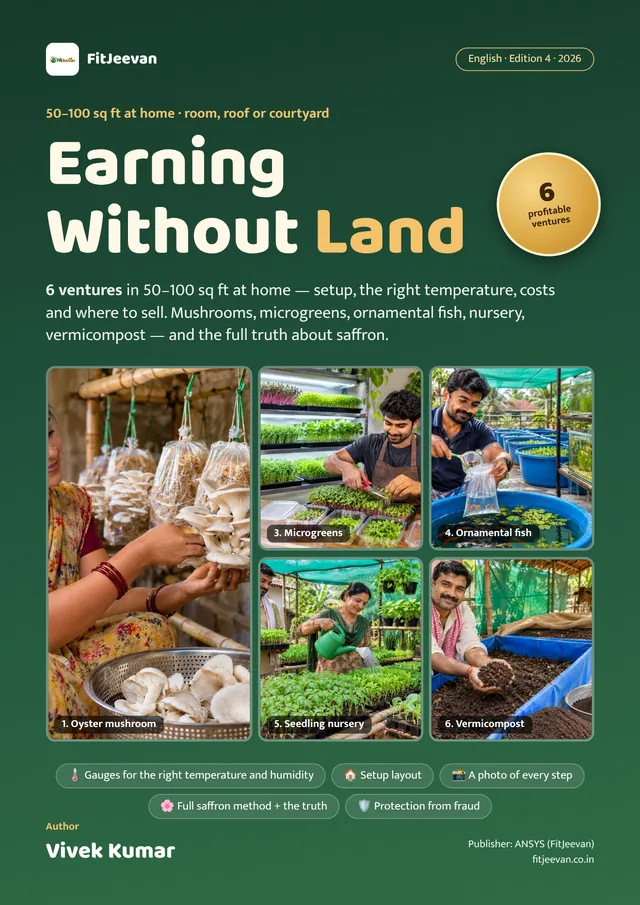
The calculations for the other 5 ventures (oyster and milky mushroom, microgreens, ornamental fish, nursery), a temperature gauge and a 90-day plan are in the book "Earning Without Land". But for vermicompost, remember this much: your own raw material, half-rotted dung, the right moisture - and buyers first.
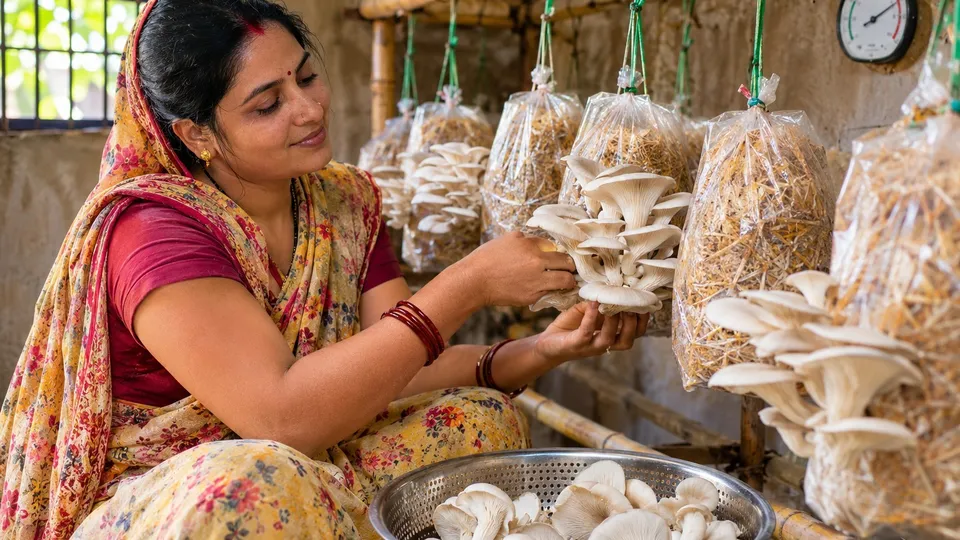 Oyster Mushroom Farming at Home: Cost, Earnings and Method
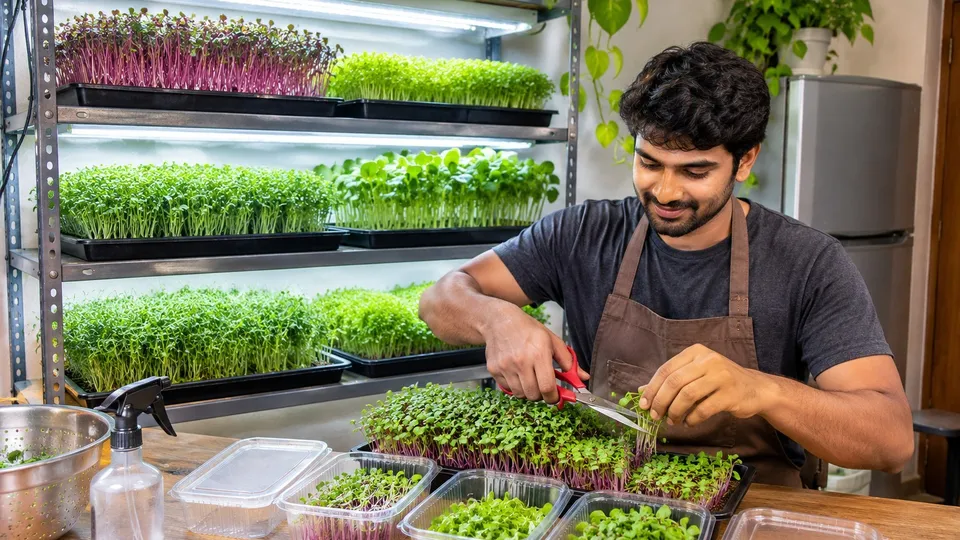 Microgreens Business: Start in 1 Room, Costs and Real Earnings
 Ornamental Fish Farming at Home: How to Start, Cost & Real Income
